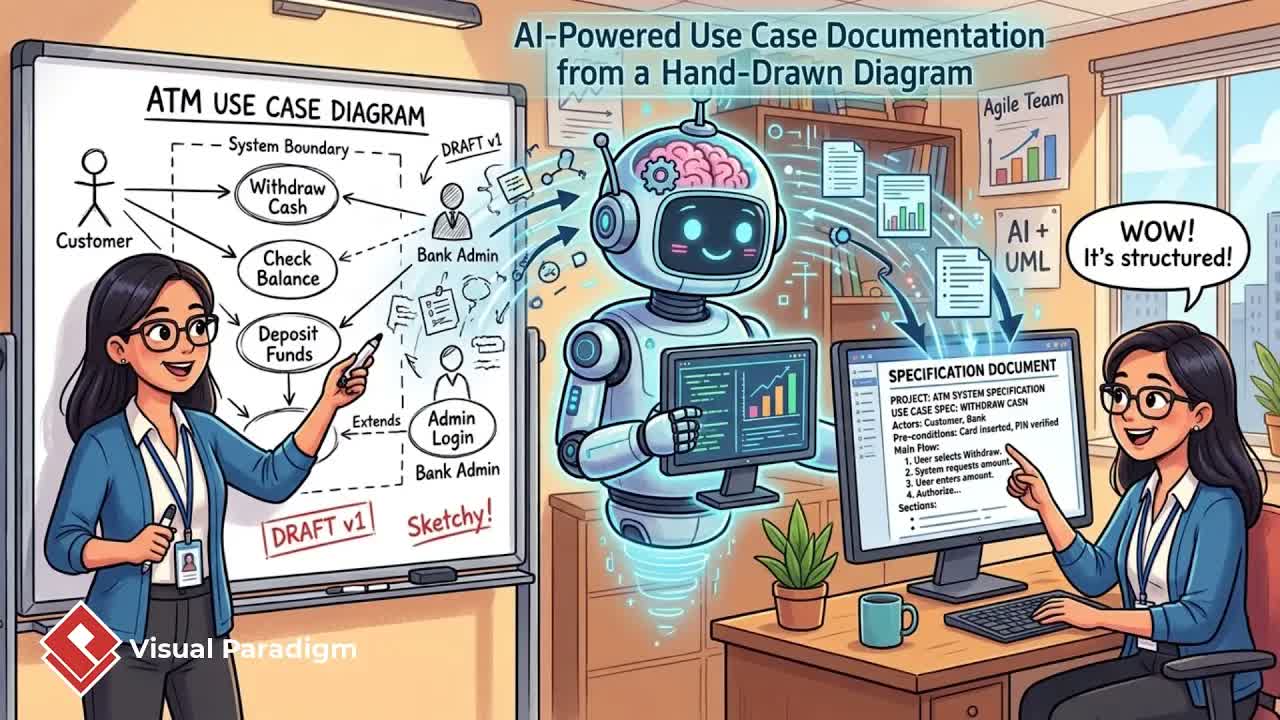
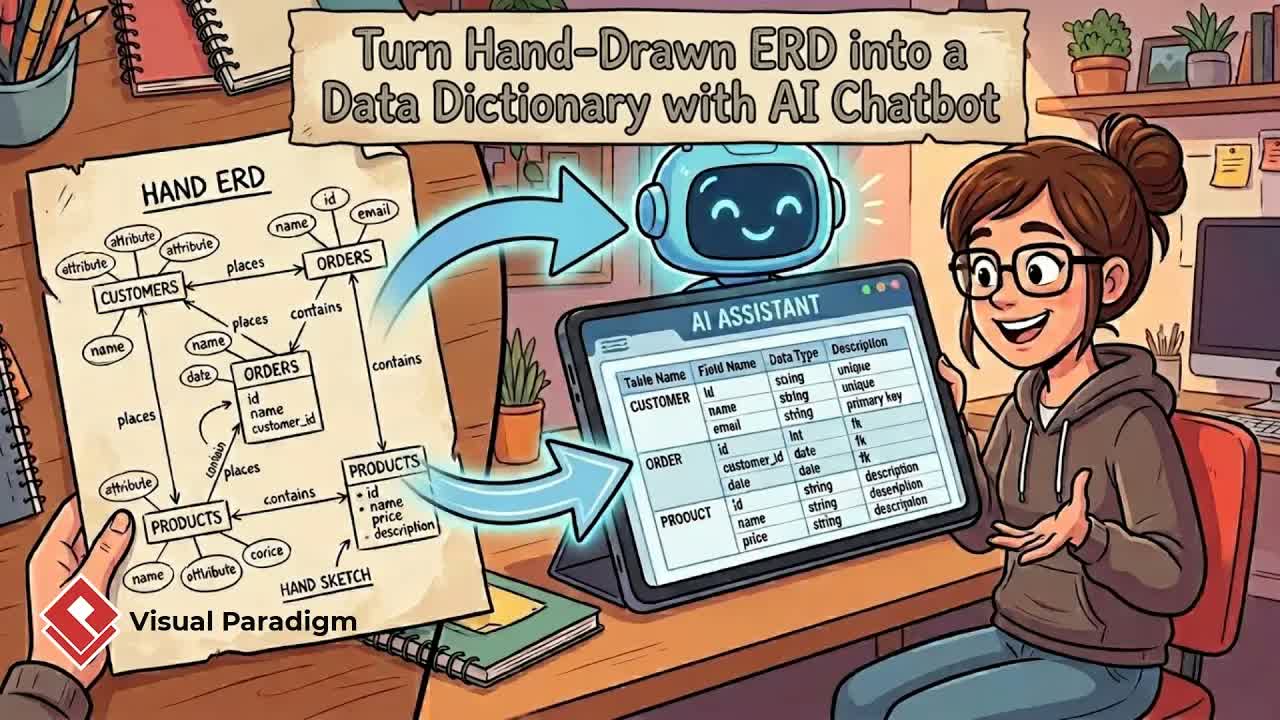
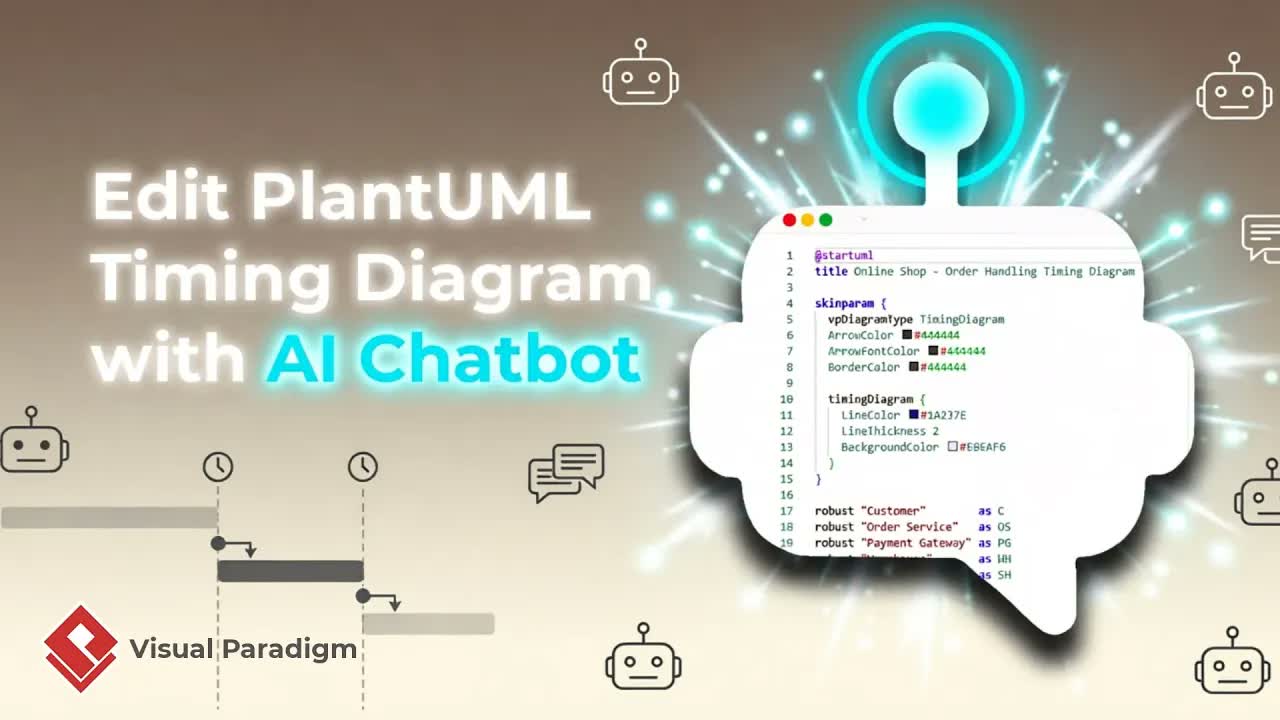
Software documentation is often one of the most time-consuming and manual phases of modern system development. Engineering teams, software architects, and system analysts frequently capture initial architectural concepts as hand-drawn sketches on whiteboards or paper during discovery sessions. Manually transcribing these sketches into digital modeling tools and writing structured technical documentation can take hours or even days.
With Visual Paradigm, you can automate this entire workflow. By combining artificial intelligence with OpenDocs, you can convert client-provided sketches or hand-drawn UML class diagrams into digital diagrams and full class specification documents in just a few minutes.
Why Automate UML Class Diagram Documentation?
Transitioning from conceptual sketches to formal documentation traditionally involves multiple tedious steps: re-drawing the diagram in software, defining class structures, cataloging attributes and operations, and writing descriptive domain documentation for stakeholders. Automating this process provides significant benefits:
- Reduced Documentation Overhead: Generate structured model summaries and detailed specifications instantly.
- Improved Accuracy: Eliminate manual entry errors when copying attributes, methods, and relationships.
- Accelerated Team Reviews: Publish digital documentation to cloud-accessible links immediately for team collaboration.
- Consistent Standardization: Maintain professional visual and markdown styling across all project documentation.
Step-by-Step: Converting Hand-Drawn UML Sketches to Full Specifications
1. Analyze and Summarize the Hand-Drawn Diagram with AI
To begin, navigate to the AI Chatbot workspace within the Visual Paradigm Unified Platform. Upload an image of your hand-drawn UML class diagram and prompt the chatbot to analyze the chart.
The AI vision capabilities examine the image to recognize structural components, including:
- Classes and their defined responsibilities
- Attributes and data types
- Operations and signatures
- Relationships (associations, inheritances, dependencies, and cardinalities)
Next, ask the AI Chatbot to generate a concise summary. In seconds, it produces a clear overview capturing the fundamental concepts and system logic represented in the drawing.
2. Re-Render to Digital UML and Generate Class Specifications
Once analyzed, prompt the chatbot to reproduce the hand-drawn sketch in a clean, digital format. The system renders a crisp UML class diagram that is easy to export in PNG format or directly embed into documentation. For advanced architectural patterns and modeling rules, refer to our comprehensive UML class diagram guide.
Following diagram re-rendering, request the chatbot to generate a full class specification document. The AI automatically builds:
- An introductory executive overview
- A domain model overview
- Detailed documentation for every class, outlining attributes, operations, and relationships
3. Assemble Professional Documentation in OpenDocs
With the AI content generated, assemble the complete document using OpenDocs:
- Launch OpenDocs in the Visual Paradigm Unified Platform and create a new page titled Class Specification.
- Switch the page to Full-Width Mode to maximize document readability.
- Use the Markdown Insert feature to paste the AI-generated model summary and introductory text while preserving original formatting.
- Copy the re-rendered digital PNG diagram from the chatbot conversation and paste it into the document to give stakeholders visual context.
- Paste the detailed class specifications using Markdown Insert, then perform any quick text edits or cleanup needed.
4. Publish and Share with Team Members
When the document assembly is complete, click Share within OpenDocs. Review your sharing permissions and click Generate Link. Your class specification document is published instantly, ready for peer review, client presentation, and collaborative updates.
Ready to Accelerate Your System Design Workflow?
Stop spending hours manually converting whiteboards and sketches into formal technical papers. Transform your engineering sketches into publication-ready models and technical documentation in minutes.
Launch the Visual Paradigm AI Chatbot today to streamline your system modeling and documentation processes.